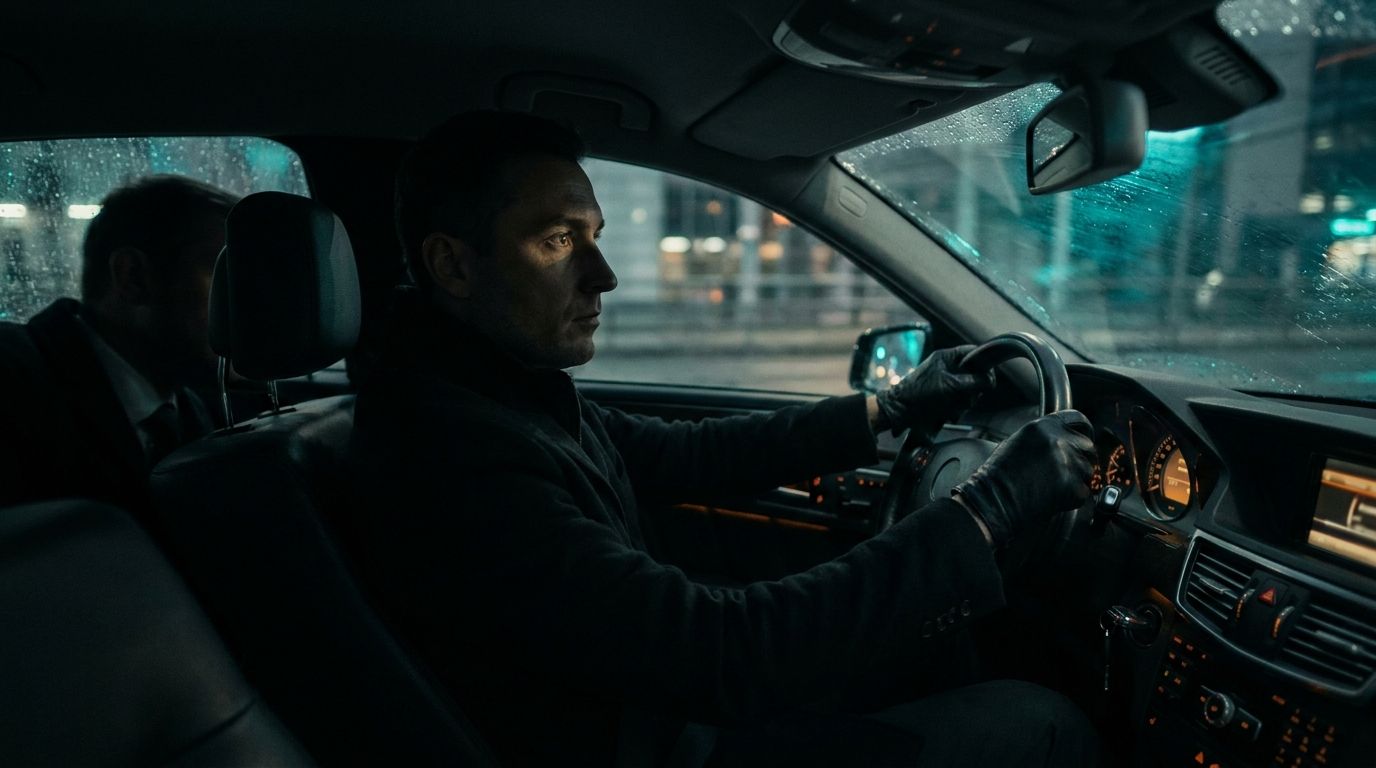
Evasive Driving vs. Executive Protection
First things first, in order to understand what we are talking about, first we must define the following terms:
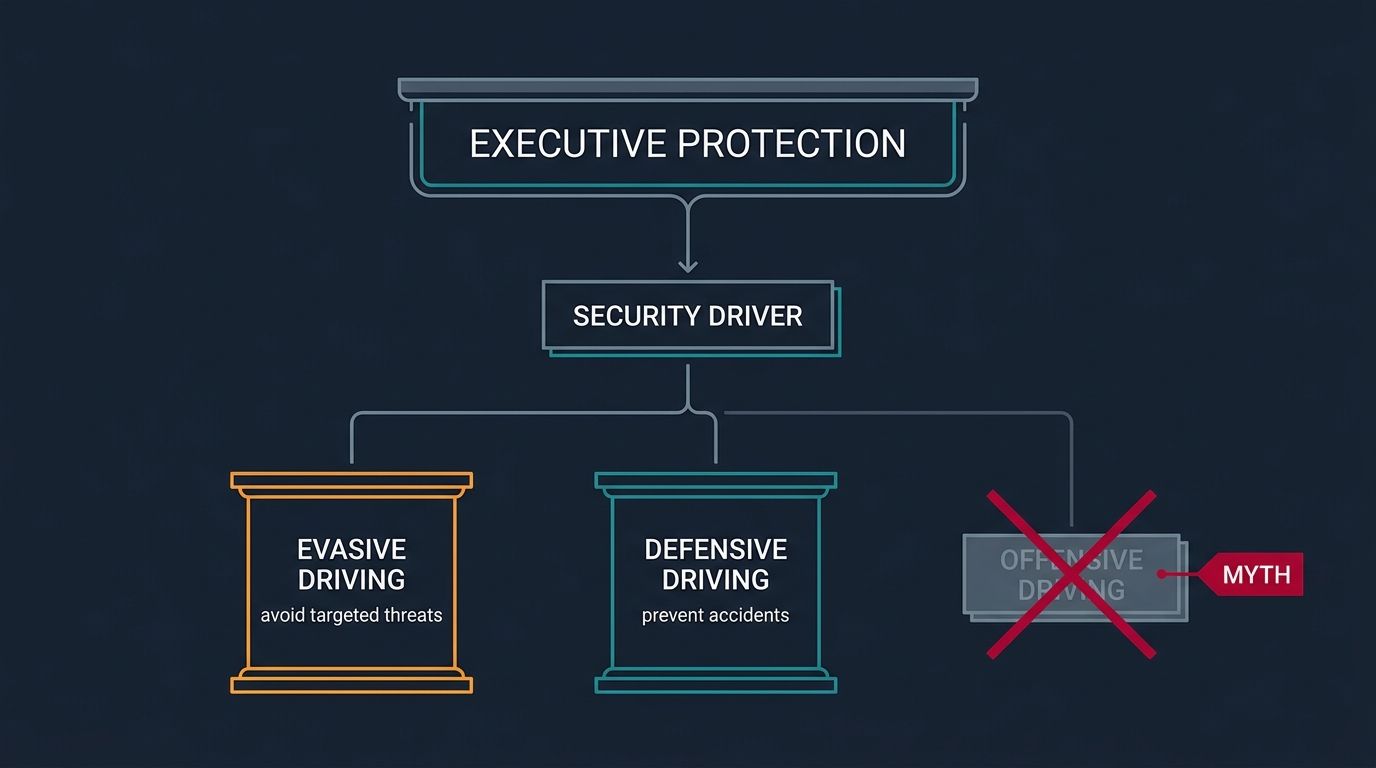
Executive protection. -It is the group of disciplines that result in the prevention of any incident against a person or his assets.
Security driver. – Defines a role within the Executive Protection structure that refers to a set of skills a person must possess in order to successfully operate a vehicle above the average driver's capabilities through the necessary training to act using the vehicle as his or her ONLY tool.
Evasive driving. -Is a discipline within the security spectrum that focuses on avoiding situations that deliberately target the principal or his assets.
Defensive driving. -Is a discipline within the security spectrum that focuses on preventing accidents or risks don’t deliberately target the principal.
Offensive driving. – There is no such thing, this is a term that was invented commercially to make it sound shocking to get people’s interest.
All other driving variants that exist in the world of security are a combination of the first two. Even if the name changes.
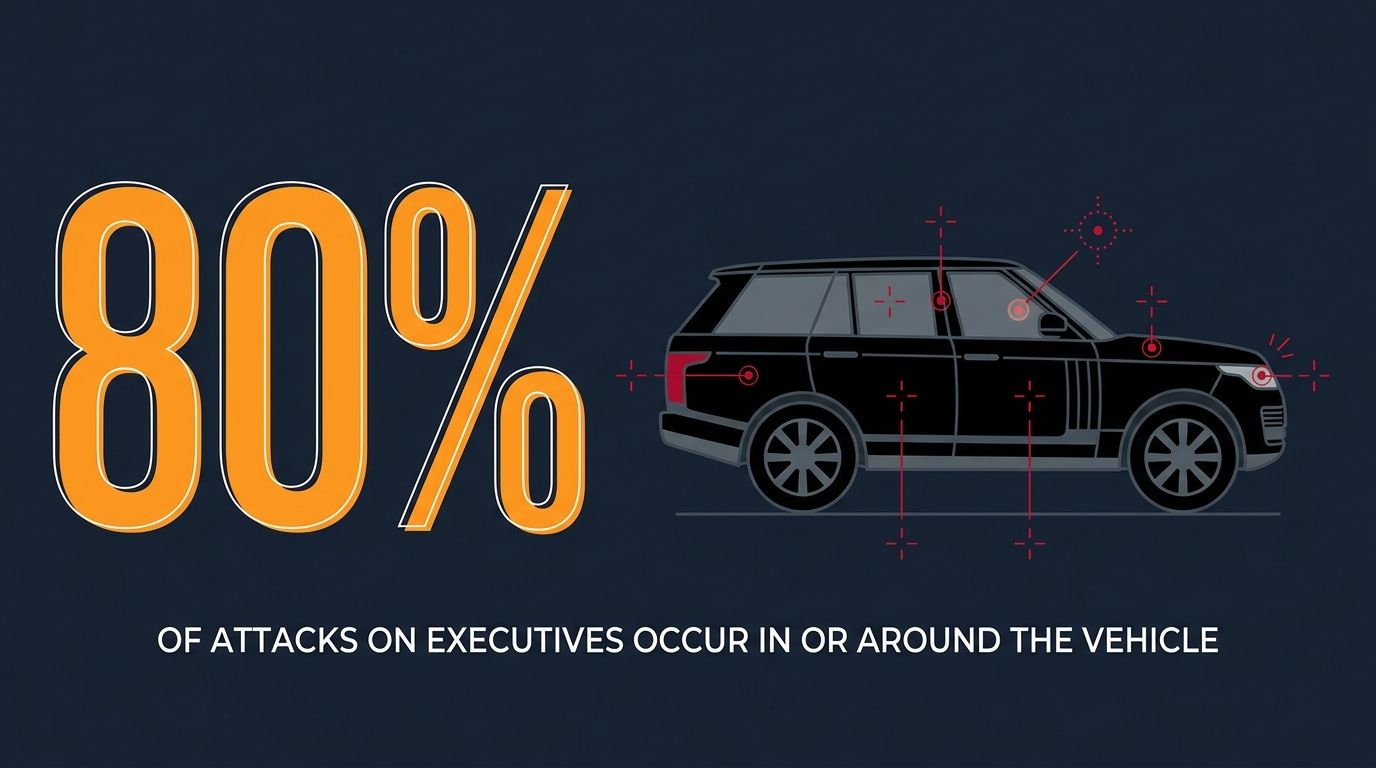
One of the most common misconceptions about "security driving" is that it by itself is executive protection. This is far from accurate. Security driving refers to a number of skills required for a specific function. That function is the security driver. This is only one of the specialties within the executive protection profession. It is definitely one of the most important. More than 80% of attacks against an executive have happened in or around a vehicle.
A security driver is the person in charge of transporting the principal, however, he is not the person in charge of the executive protection, He is just one more instrument within a protection system.
Not all drivers are protectors, but all protectors must be a Security Driver.
Is it possible for a driver to be a bodyguard and vice versa? Of course, but not at the same time. One of the rules of executive protection involves every bodyguard. Every bodyguard must be able to commandeer a vehicle. The goal is to evacuate his or her principal under any circumstance. This holds true even if he or she is not the designated security driver for that detail.
The function of the Security Driver
The security driver has only one function. That function is operating a vehicle. Meanwhile, the rest of the team oversee other responsibilities such as surveillance detection. Their attention should be limited to the vehicle. It should also focus on the SAFE transportation of the executive from point A to point B.
A security driver must have the skills necessary for this. He or she must be the team member with the highest self-control during critical situation. This means he or she must maintain decision-making abilities under pressure. He or she must also possess the skills needed to perform the job. This holds true even when stress or fear increases.
A Security Driver, in short, must be able to control the vehicle above 80% of its capabilities under high stress conditions. (Specially fear induced stress)
The only way to achieve this is through training and stress inoculation. Most importantly, it requires the ability to measure the skills of each individual. This measurement serves as a decision-making tool. It allows you to allocate assets within a protection detail according to their performance. This should never be done based on human opinion. It should be done on a scientific method of reporting.
Key Skills for the job
Based on the concept of risk management where probability is key, and based on statistics from all over the world, the risk of being victim to a traffic accident is much greater than being the victim of a targeted attack or crime. So, what is the point of training only in evasive or security driving and not on defensive driving?
Beware of false empowerment
The basis of a good security driver is to possess the skills necessary to anticipate a potential threat. The main risk are traffic accidents. According to Maslow's Principle, if the only tool you have is a hammer, it is tempting to treat everything as if it were a nail. A driver's training focused only towards security or violent situations will produce an aggressive driver. That driver will look for a violent solution to any problem. This places his principal at an even greater risk.
On the other hand, if you do not purposely create a skill set and only teach evasive driving techniques, under a high-stress situation the possibility of the driver losing control of the vehicle and thus creating a secondary crisis, is very high.
In conclusion, the job of security driver is a part of executive protection. Even so, it is not considered executive protection in its entirety. Nevertheless, it is a specialty within executive protection. It is key in escaping or avoiding a situation. Training will come in handy here more times than in any other specialty. A security driver will have the life of his or her principal in his or her hands. This happens literally every day he or she gets in the vehicle. The statistics will always be against him or her.