
The human brain is a fascinating and complex system. It manages a wide range of tasks. These tasks run from sensory perception to decision-making and learning. According to experts, there are two types of information in your brain. These are knowledge and skills. Both are essential. But how do they function, and how do they interact?
Knowledge: The Foundation of Our Skills
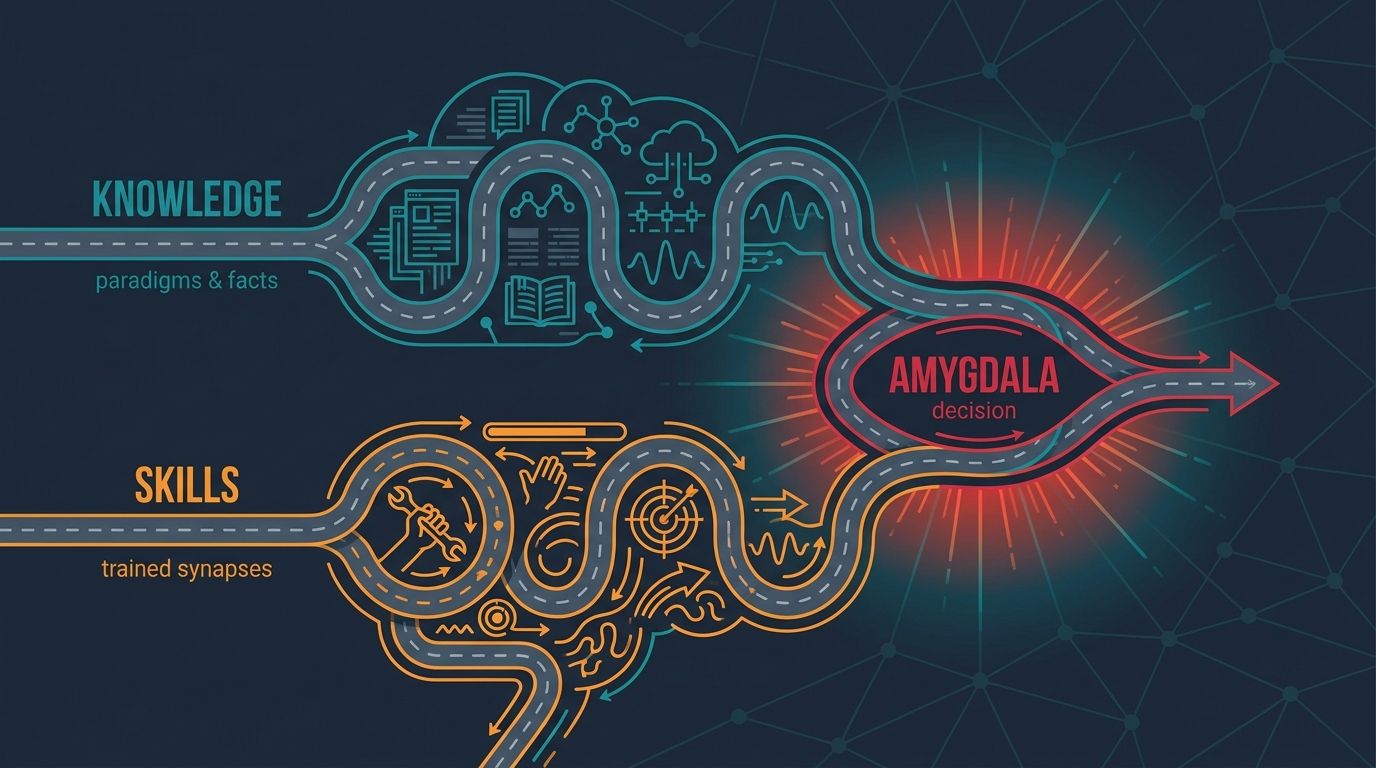
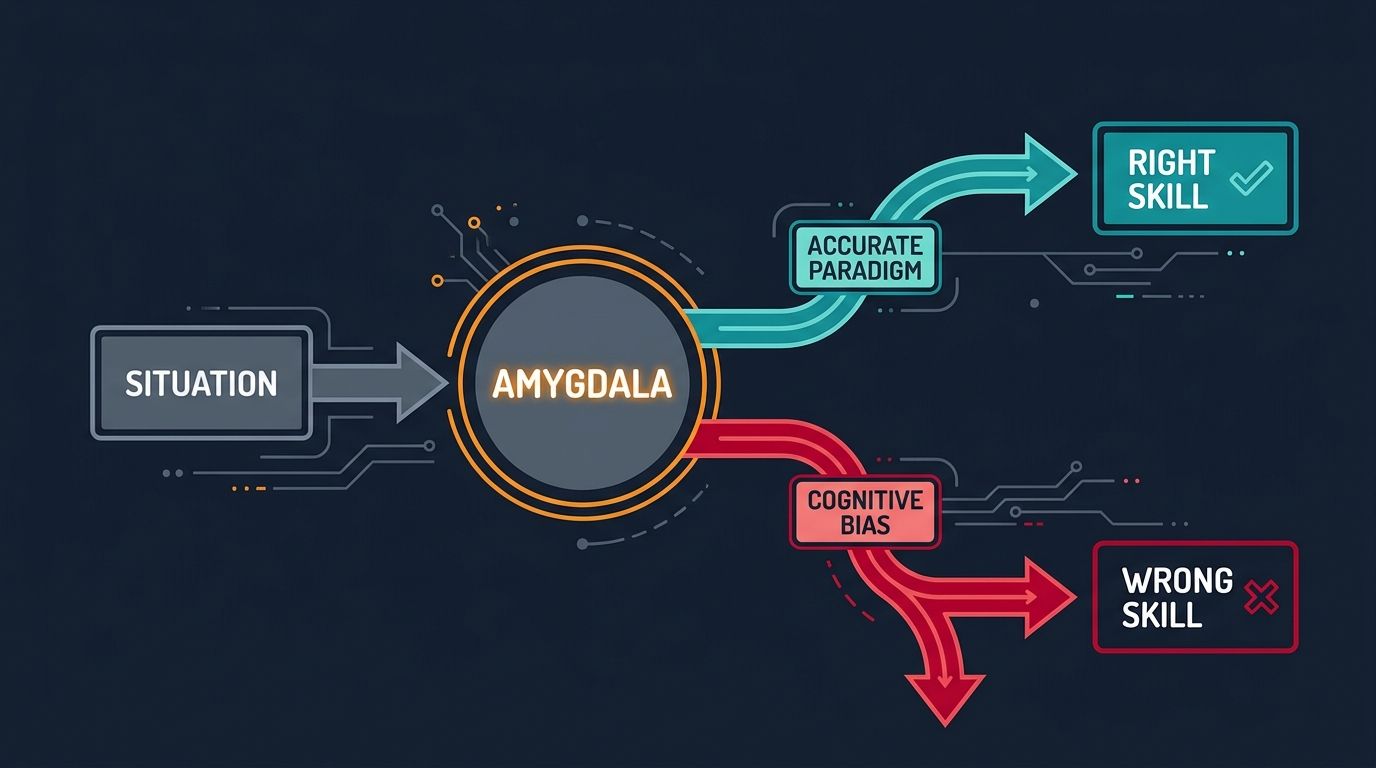
The knowledge in your brain requires paradigms for interpretation. These paradigms can be accurate or erroneous. They determine how your brain employs available skills for the situation at hand. An accurate paradigm prompts your brain to select the best skill to confront a situation. An erroneous paradigm may prompt your brain to select an inadequate skill.
Knowledge encompasses our understanding of the world. It includes facts, concepts, and information. We have learned these through education and experience. Knowledge provides a frame of reference. We use it to interpret and make sense of new information and experiences. It is the backbone of our cognitive abilities. It guides our decisions and actions.
Skills: The Practical Application of Knowledge
Skills are the practical application of knowledge. They are the abilities we've developed through training and experience, enabling us to perform specific tasks. Skills can range from soft skills, such as communication and problem-solving, to hard skills, such as driving a car or playing a musical instrument. Skill development involves strengthening the neural connections in the brain through deliberate and consistent practice, leading to enhanced speed, precision, and efficiency.
The Interplay of Knowledge and Skills
The interaction between knowledge and skills is intricate and dynamic. Skills are grounded in knowledge. The effective application of skills can contribute to knowledge enhancement. However, this relationship is not just linear. It is deeply embedded in our cognitive processes. It is often beyond our conscious awareness.
This intricate dance takes place in the amygdala. The amygdala is a part of our brain associated with emotions and decision-making. It selects a suitable skill for the situation. It does this based on heuristics. Heuristics are simple, actionable information according to available paradigms. This selection does not happen consciously. It is a process heavily influenced by our cognitive biases.
Cognitive Biases: The Inherent Challenge
Cognitive biases are systematic errors in thinking that affect our decisions and judgments. They are often a result of our brain's attempt to simplify information processing. These biases, shaped by our experiences, beliefs, and various other factors, affect our interpretation of reality and, by extension, our skill selection in response to situations.
For instance, a cognitive test does not measure your skill as a driver. That could be assessed on a racetrack. Instead, it examines your cognitive biases. It illuminates the paradigms you use to define reality. Consequently, it reveals your personality as a driver based on your responses.
Conclusion: The Road to Mastery
Understanding the complex relationship between knowledge, skills, and cognitive biases is crucial in any skill development process. Mastery demands more than mere accumulation of knowledge. It demands more than mechanical repetition of a skill. It requires deliberate practice, feedback, and adaptation. These lead to better cognitive paradigms and improved skills.
Consider driving or any other skill. You may think you will rise to the occasion in high-stress situations. You may be mistaken. Lt. Col. Dave Grossman is the author of the book 'On Combat.' He famously said, "You don't rise to the occasion, you sink to the level of your training." Therefore, to be truly skilled, we need to practice correctly. We need to develop accurate cognitive paradigms. We need to generate measurable, consistent, and replicable results across different real-life situations.
Our understanding of the human brain continues to evolve. So will our approach to skill and knowledge development. We must recognize cognitive biases and correct erroneous paradigms. This will equip us with the tools to better harness the interplay of knowledge and skills. It will pave the way for higher levels of expertise and performance.