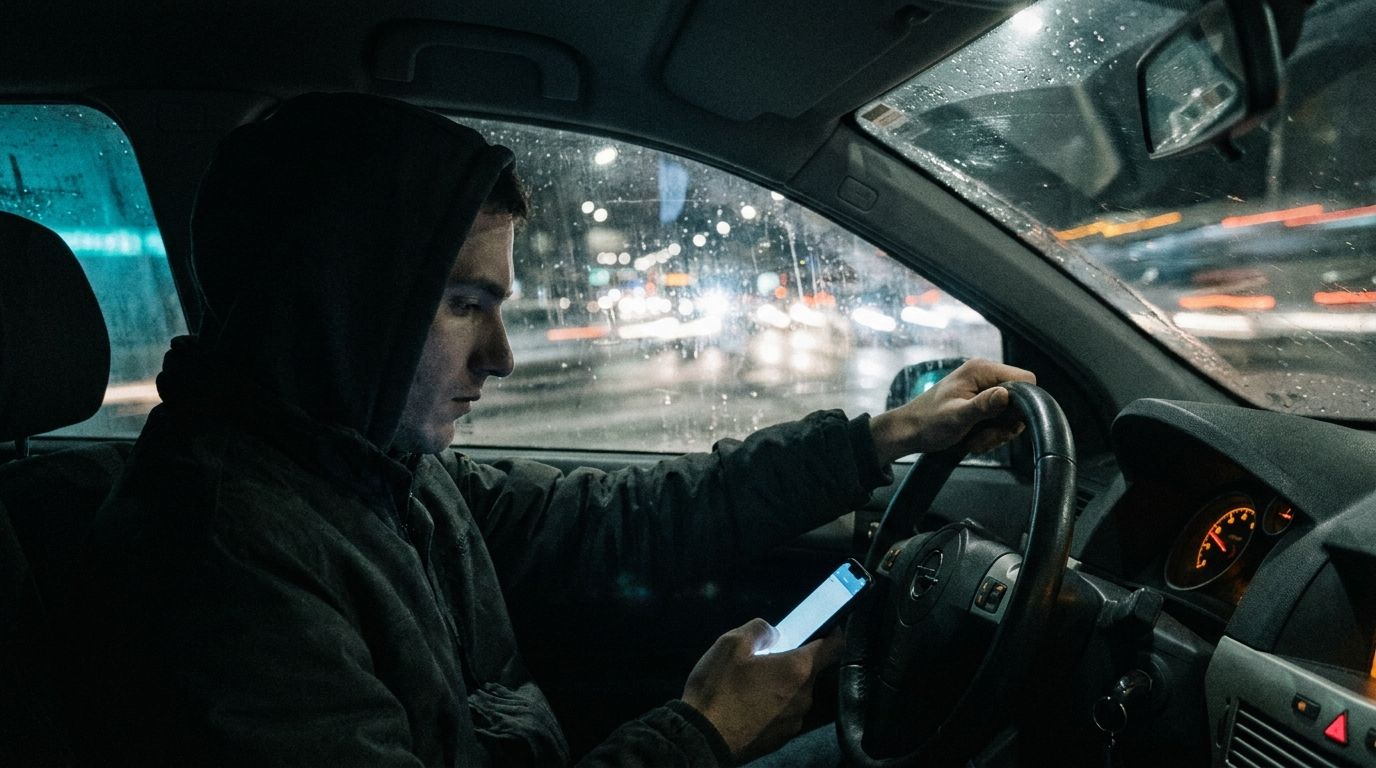
Most people think they are good at doing many things at once. Some argue this is easier for certain people than for others. Yet even if that were true, one fact remains. Texting while driving forces a choice your eyes cannot make. We physically cannot focus our gaze on two things at different distances at once.
We also have to consider the reaction times involved in changing from one action to another. This is explained by Mark Green PhD. He is one of the leading forensic consultants of experimental psychology. His work focuses on perception, attention, time and the human factor.
The Components of Reaction Time
There are several components that are involved in a person's reaction time:
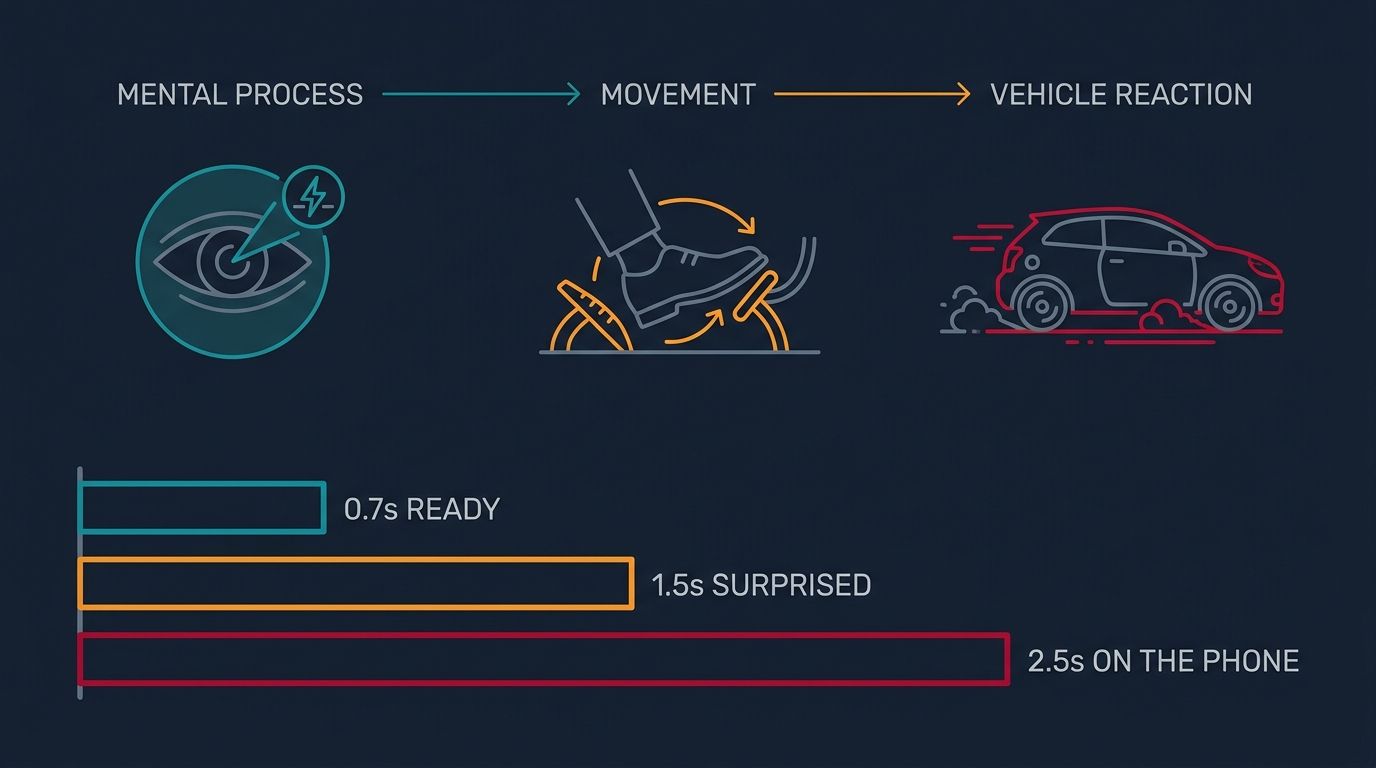
- Mental process: This is the time it takes for a driver to spot an obstacle in their path, and make the decision on what to do:
Example: Something draws the driver's attention in his peripheral vision. He analyzes the object and realizes it is a person in his way. He combines this with the notion of distance and speed. He determines what is happening and what will happen if he does not react. He eventually makes a decision to brake thoroughly rather than turn.
- Movement: the time it takes to move your foot from the accelerator to the brake or to turn the steering wheel.
- Vehicle Reaction: The driver pressing the brake does not immediately stop the vehicle, there are many factors to consider such as physical forces, gravity and friction.
On average, a person takes .7 seconds to react when they are waiting for the situation. They take 1.5 seconds when it is a surprise. They take up to 2.5 seconds when they are distracted with their eyes on a cell phone. This last delay is the cost of texting while driving.
What Distraction Costs in Feet
Consider standard data from the Society of Automotive Engineers in the US. Take an average vehicle traveling at a speed of 40 mph. This is the average speed in urban areas. A pedestrian crosses 197 feet away. The following will happen:
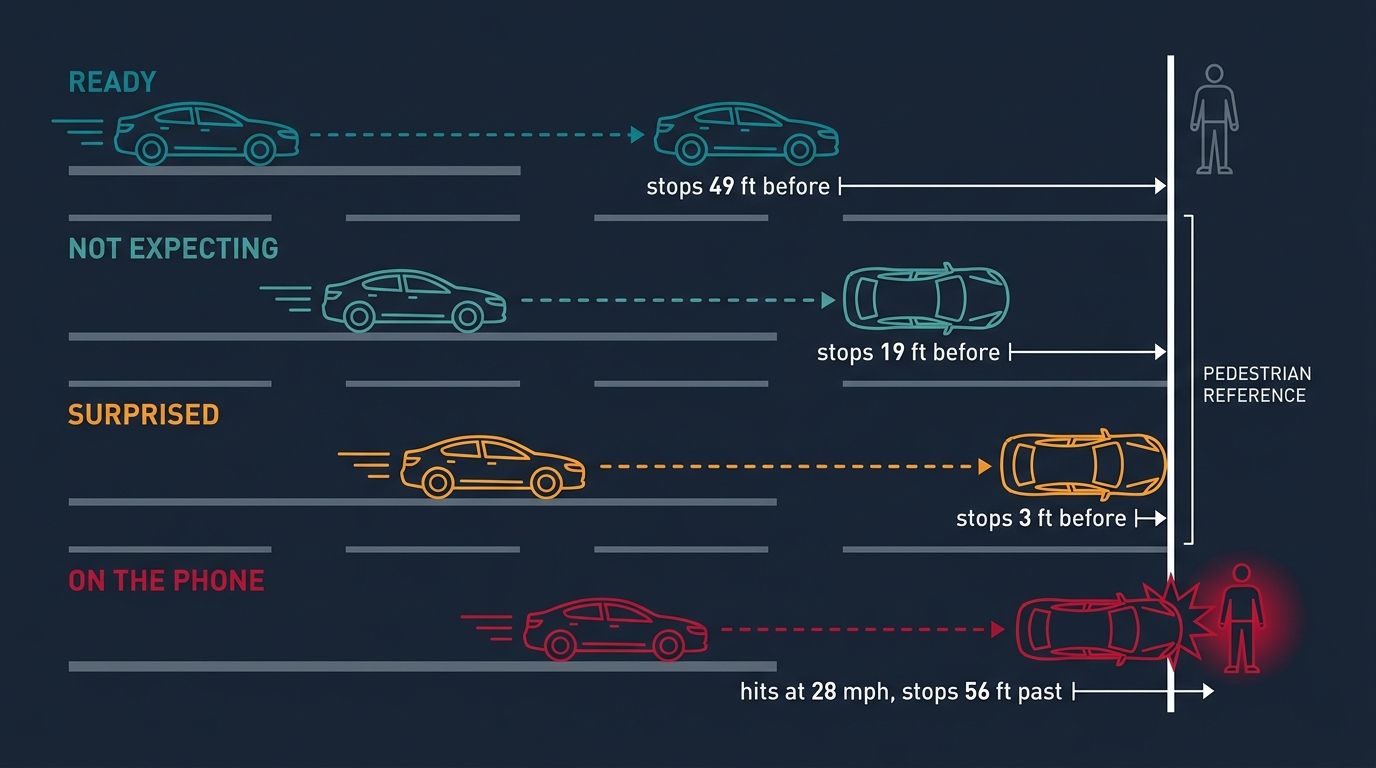
If you are waiting for it, it will brake 49 feet before running over the pedestrian
If you are not waiting for it, the vehicle will be able to stop at 19 feet from the individual
If it came as a surprise, you will stop less than 3 feet from him; but
If you are looking at your cellphone, the vehicle will run him over at 28 mph. It will travel 60 feet before you even realize a person is standing in front of you. You will begin to brake just 50 feet from him. You will finally stop your vehicle 56 feet after running the pedestrian over.
Sending a text message requires you to take your eyes off the road for 4.6 seconds on average. At a speed of 54 mph, the vehicle will travel the equivalent of a football field. You cover that distance with your eyes closed.
16% of traffic accidents that resulted in death were due to distractions while driving (It is presumed that most of them were due to "texting" while driving).
20% of injuries reported to insurers in 2009 are due to the same reason.