Last year a group of doctors at a Nairobi hospital was operating to remove a clot from a patient's brain. After hours of surgery they realized they were operating in the wrong patient. The patient did not require intrusive surgery at all.
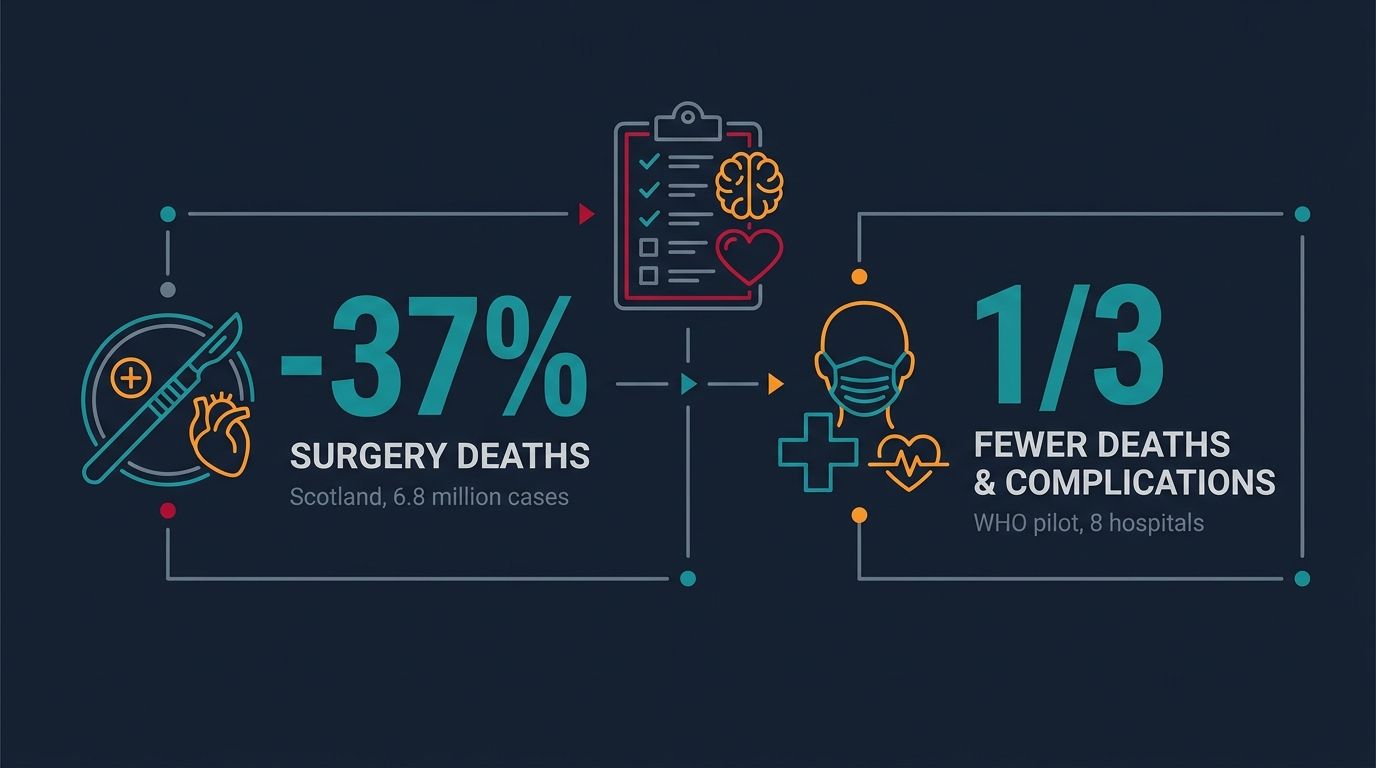
It is these types of horror scenarios that the surgery checklist implemented by the World Health Organization seeks to prevent. Atul Gawande developed this checklist in 2000. It lists 19 things that doctors and nurses should review during the 3 stages of surgery. The questions are extremely simple. Yet they can have life-or-death consequences. They range from whether the patient has any allergies to confirming the patient's name. They also confirm the procedure to be performed before the doctor makes the first incision.
Following these steps has shown a huge decrease in human error. The WHO ran a pilot at 8 hospitals located in 8 international cities. There, the checklist was associated with a one-third decrease in surgery-related deaths and complications. One of the most powerful studies to understand the functionality of checklists was in Scotland. Since its implementation in 2008, surgery mortality rates have been reduced by 37%. That figure comes from the statistic collected from 6.8 million cases.
When does the experience displace a checklist?
Human beings tend to overrate their own skills. This is especially true if we have done an activity for a long time and consider ourselves professionals of the subject. We think that our experience, intelligence, and agility of thought are the essential skills that we require to handle complex situations. Gawande calls this "professional audacity." But everyone makes mistakes at some point. In security, the more complex an operation is, the more things can go wrong. The more people involved, the higher the risk as well. This is why it is imperative that protection teams adopt the virtues of regulation. They cannot rely on experience and knowledge alone.
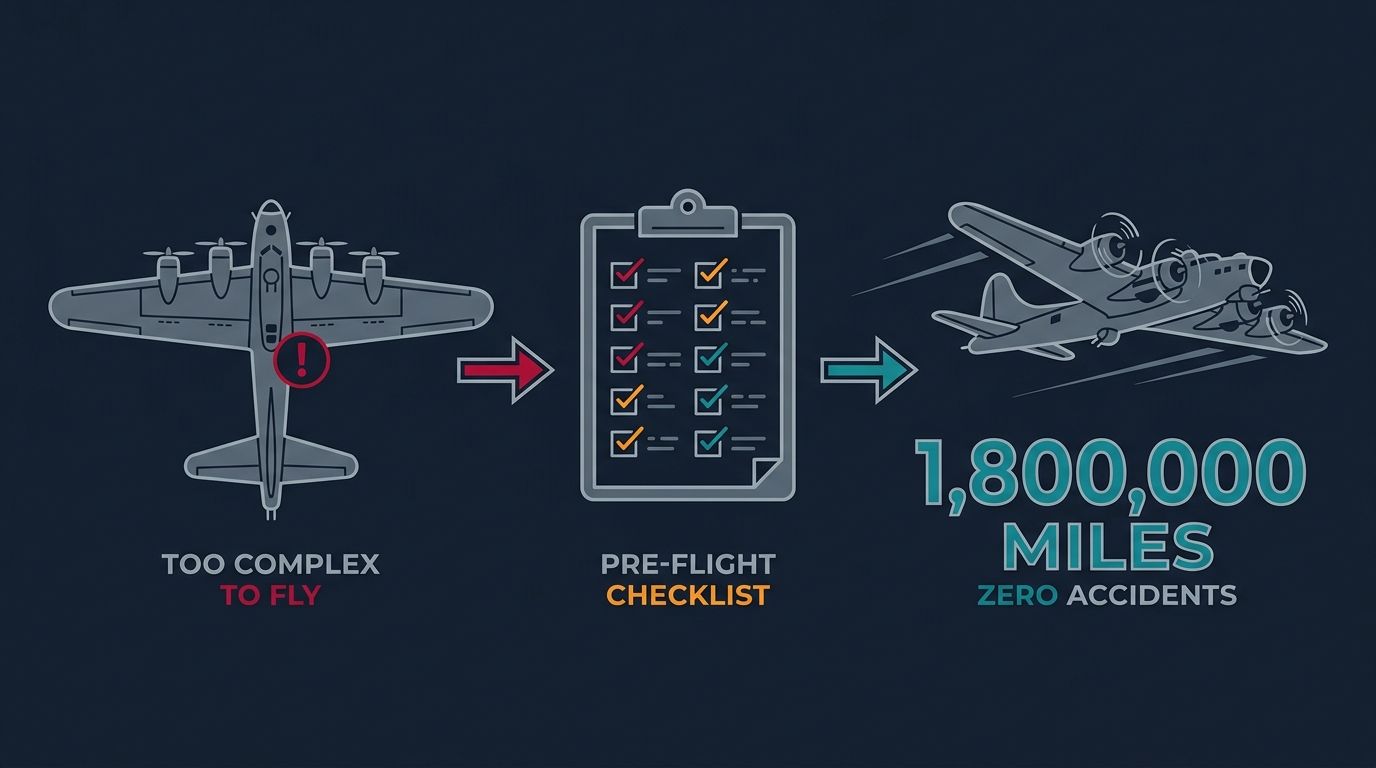
In 1935, Boeing introduced its 299 bombers. They had all sorts of capabilities, spectacular for the time. But the new capabilities of the aircraft also made it more difficult to fly. This meant that the risk of human error would increase. The US Navy proved this during a flying competition that resulted in the deaths of two of its pilots. After this incident, the Navy introduced a new checklist for pilots. They reviewed it during takeoff, flight, landing, and displacement. With the introduction of this checklist, American pilots flew more than 1.8 million miles without a single accident.
For security drivers and protection officers
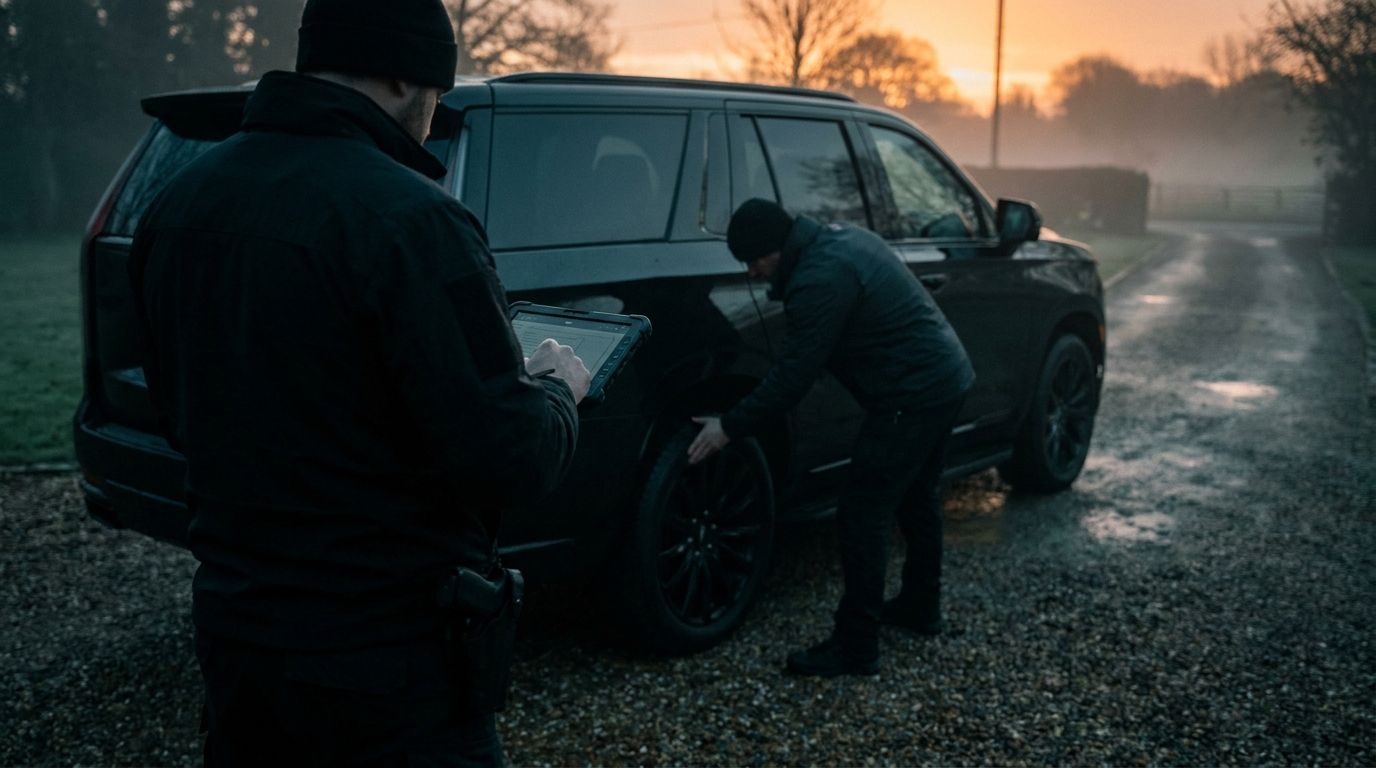
17 out of 20 car accidents are due to poor decision-making, and many of them have to do with preventive vehicle maintenance, skipping inspections or assuming that things are because there's no reason to assume otherwise. A security driver who does not check the pressure of his tires because they have never changed, and he might learn the hard way when in a misfortunate situation of having a disabled tire with his principal inside the car, and then realize that the spare tire is deflated as well, and he will have to explain to the principal why he is out of options.
For security professionals, checklists have to do with customer service in most cases. But they can become life and death in the event of an attack. Checklists, however tedious, should be applied to any process that requires reliability. This matters most when a protectee's life is part of the responsibility.
A simple vehicle done once a week will save a protection detail a lot of headaches. In the event of a crisis, it will prove to be a blessing. You will know that your vehicle is in perfect shape. That lets you operate confidently at its limit to get out the threat at hand.